
Free written scope consultation - allowances, timeline, and change-order rules on paper before a single trade is scheduled
Cambria Home Additions & ADU: The San Jose Owner’s Guide
If you’re planning a home addition or ADU in San Jose and want Cambria quartz on the countertops, island, or wet bar, the installed cost for the full project typically runs $53,100 – $153,400 depending on square footage, site prep, and the Cambria design you choose. We install Cambria surfaces as part of larger additions, which means you’re not chasing a separate countertop contractor when the framing’s done. Most San Jose owners discover the real cost driver early: it’s not the Cambria itself, it’s what’s underneath the addition, the foundation, the roof tie-in, the sheer inspection load in Santa Clara County.
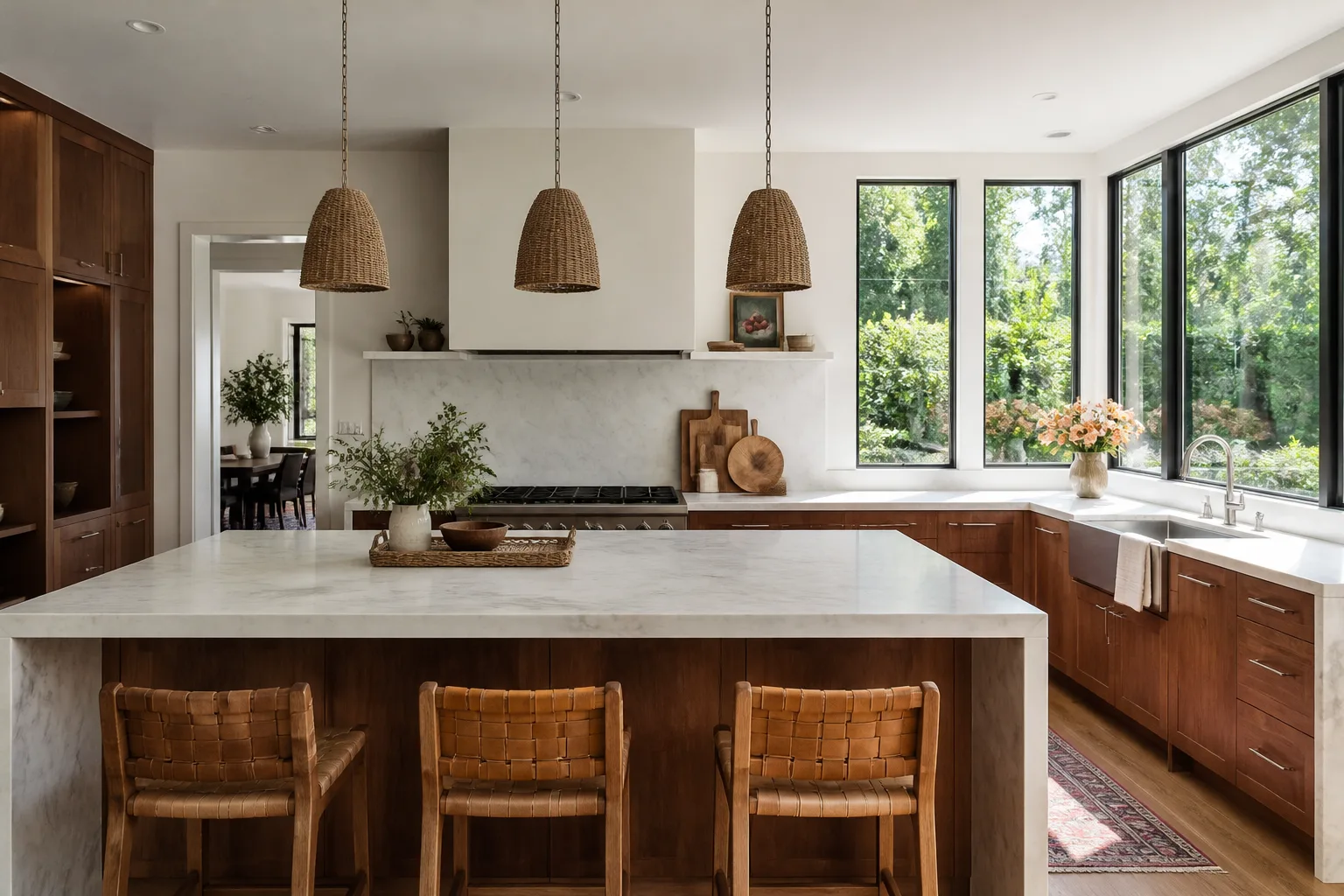
Here’s what that looks like on the ground. You’ve got a Cambria-topped island in a kitchen that’s now too small, or you’re converting a detached garage into an ADU and the existing counters won’t survive the sledgehammer phase intact. Either way, the Cambria piece is one material decision inside a much bigger structural job. We price both together so you get one written number, one crew, one guarantee.
Which Cambria Models This Applies To
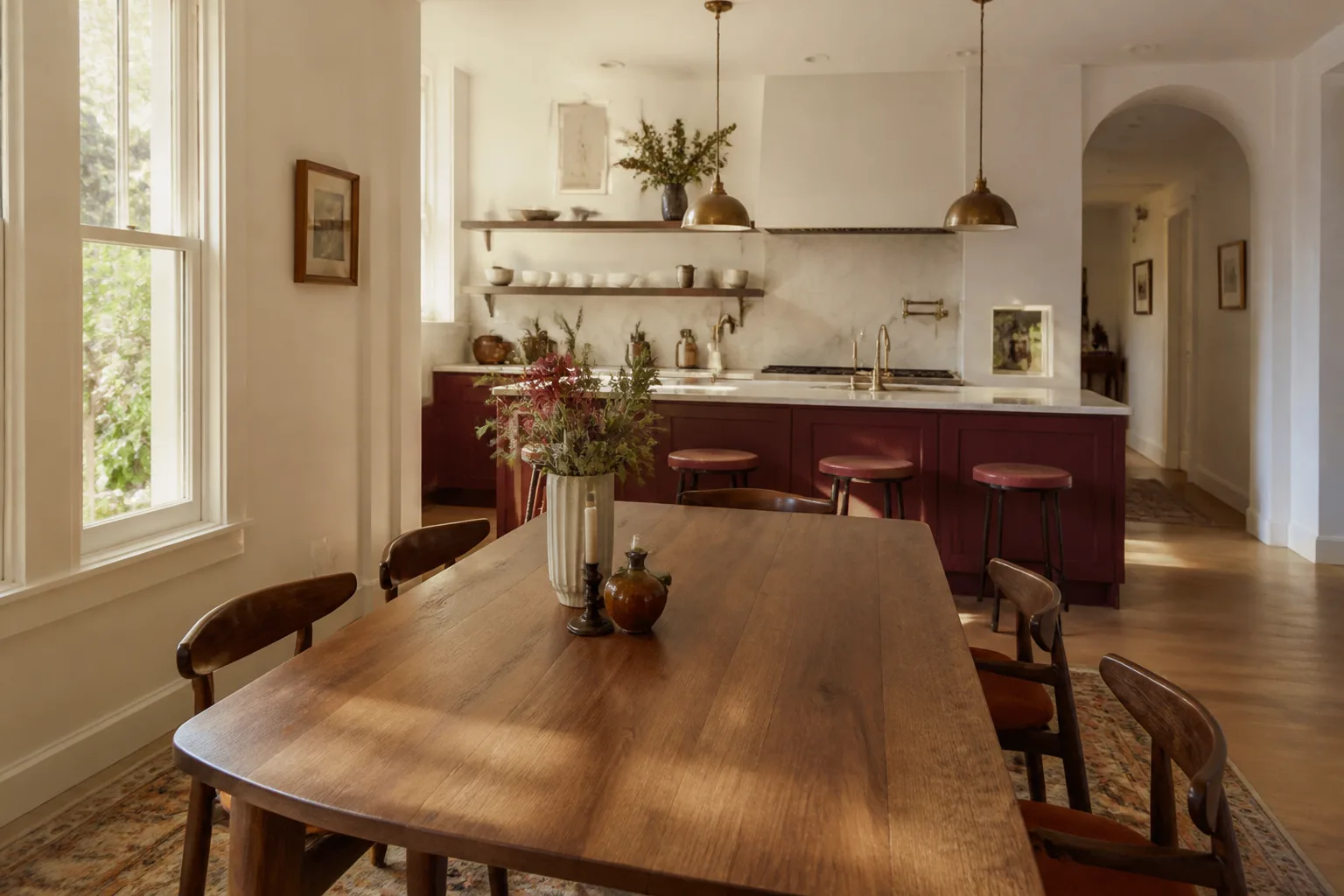
Cambria quartz comes in more than 180 designs, but for home additions and ADUs in San Jose, we see the same handful repeated: Brittanicca, Summerhill, Torquay, and Ella on kitchen islands; Skara Brae and Annicca on bathroom vanities; and the darker Portrush and Ironsbridge for wet bars. The brand carries its own lifetime warranty, which runs alongside our 365-Day Done Right Promise, so the material is protected two ways.
The compatibility gotcha with Cambria is slab size. Full slabs are roughly 132″ x 65″, and if your addition’s island is longer than that, you’re into a seam. Cambria fabricators in the Bay Area can do near-invisible seams, but placement matters, and a seam over a dishwasher or sink base is a stress point. We plan seam placement before the cabinets are even ordered, because moving a seam after templating means eating a slab. The other check: Cambria designs are directional. Some have a grain pattern that shifts depending on how the slab is cut, so the island top and the perimeter counter can look subtly different if the fabricator isn’t paying attention. We’ve been back to fix that exact mismatch in Willow Glen, and it’s the kind of detail that shows up a month after you stop noticing the new space.
Styles & brands we work with







Signs Your Cambria Home Additions & ADU Is Failing
- Cracks radiating from a corner or cutout. Quartz is tough but brittle. A crack near a sink cutout or the cooktop opening usually means the slab wasn’t supported evenly underneath, or the cabinet base has settled and the stone is now bridging a gap.
- A seam that’s opened up. If you can feel the seam with a fingernail and it wasn’t always like that, the counter is moving. In additions, this happens when the new foundation settles slightly during the first two years, which is normal, but the counter needs to be re-leveled before the gap grows.
- Water pooling at the backsplash line. Cambria is non-porous, so water sitting against the wall means the caulk joint failed, not the stone. Left alone, that water runs behind the cabinets and starts the slow work of warping the boxes.
- Chipping along a heavily used edge. The front edge of an island takes abuse from pans, stools, and backpacks. Persistent chipping in one spot often traces back to poor overhang support, typically the corbels or the metal brackets weren’t rated for the weight.
- A dull, hazy patch that won’t polish back. That’s usually a chemical etch from a drain cleaner or paint remover that sat too long. Cambria resists most acids, but some products will still cloud the surface. If it bothers you, a fabricator can re-polish in place without pulling the whole top.
Replacement Cost & What’s Included
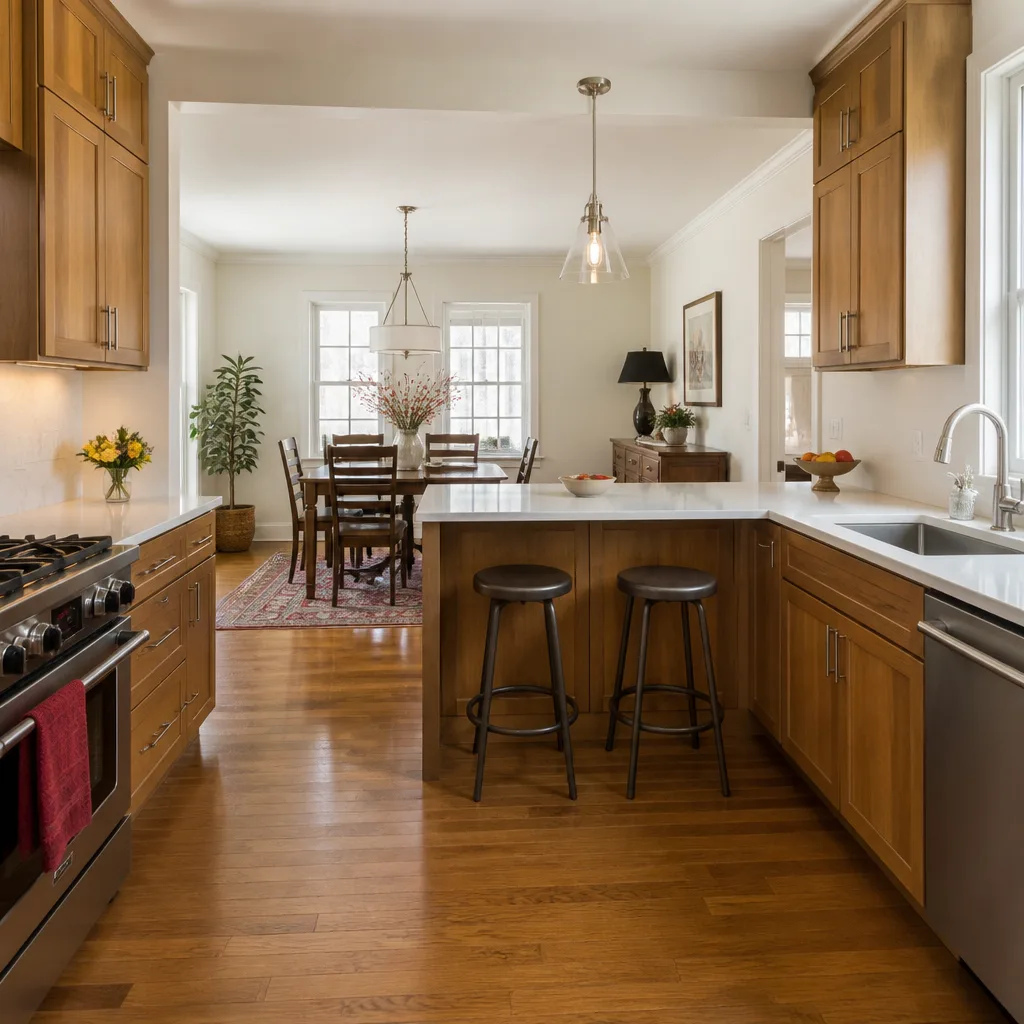
For the Cambria surface work alone within a larger addition, you can figure $2,360 – $7,670 for countertop installation as a line item, but the real number lives inside the total project. A full home addition in San Jose runs $53,100 – $153,400, and an ADU construction ranges $106,200 – $259,600. Those numbers include everything: foundation or slab, framing, roofing, electrical, plumbing, drywall, paint, and the Cambria tops cut, templated, and installed by our fabricator.
The Cambria line item moves up or down based on slab count, edge profile, and whether you’re doing a waterfall island edge (yes, it’s usually worth it). We write the price before the first tool leaves the truck, and that number is the number on the invoice. If the Cambria craftsman calls out a seam concern during templating, we handle it before fabrication, not after the slab’s in your kitchen. Every job carries our 365-Day Done Right Promise in writing.
See the difference
 Before
 After
After Before
 After
After Before
 After
AfterDIY or Call Us?
Cambria quartz is not a homeowner-level material to handle. A full slab weighs between 800 and 1,000 pounds. The lift, the seam glue, the edge polish, the sink cutout, all of it is specialized work, and a dropped slab doesn’t just break, it can take out cabinets, flooring, and bodies. If you’re curious about what’s under your current top, you can pull a drawer and look for the support brackets and the plywood or cement board substrate (the layer between the stone and the cabinets). That’s safe.
If you see gaps, warped substrate, or cracked support, that’s when you call us at (669) 274-2362. Trevor Nash once told a homeowner, “Give me the real problem and I’ll give you the real number.” That’s still how we work. We’ll look at the whole addition, not just the stone, and tell you what’s failing, what can wait, and what it costs to fix both.
FAQs
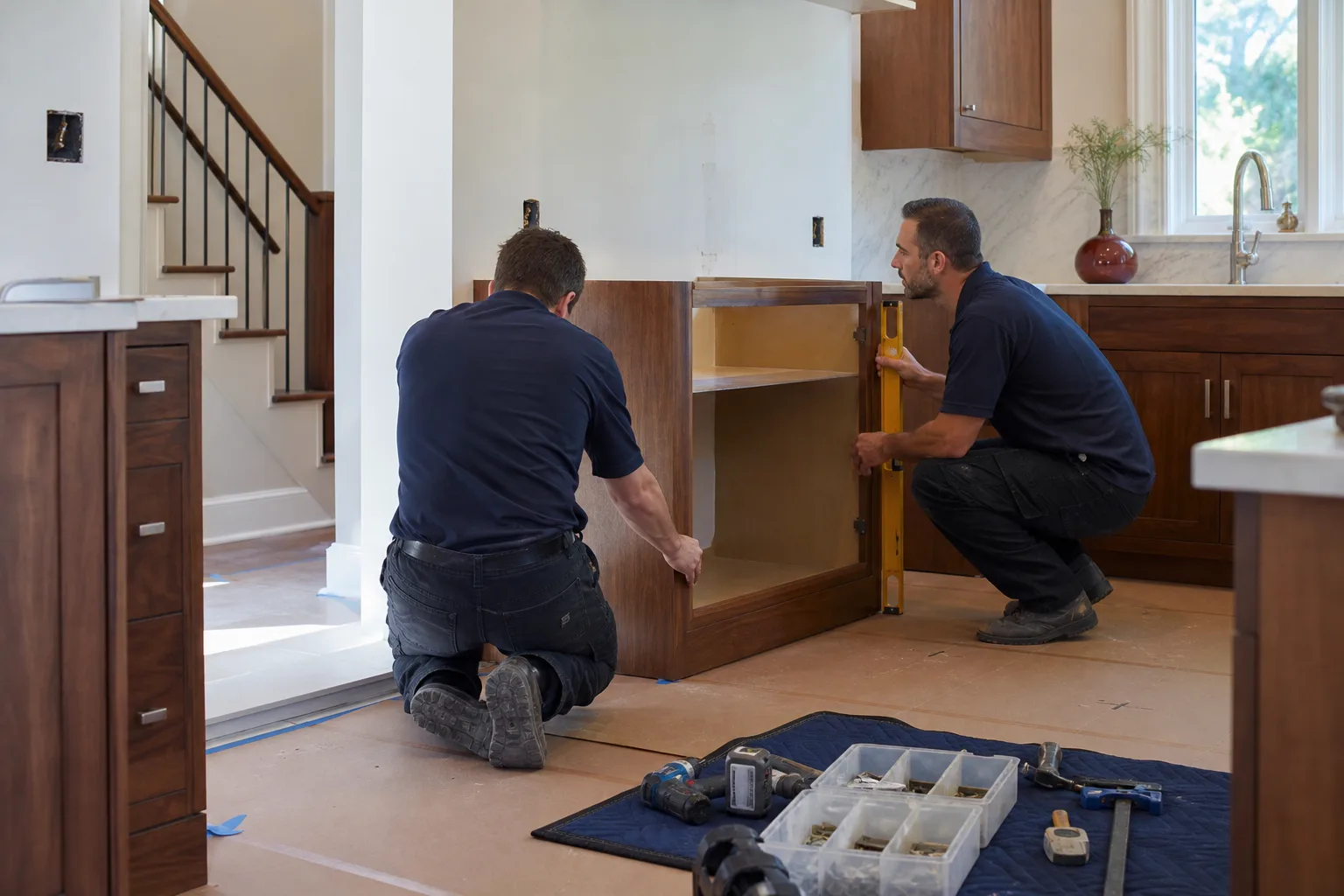
Cambria quartz carries a lifetime warranty and the stone itself should outlast your kitchen as long as the cabinet structure beneath it stays sound. In San Jose, the bigger variable is the addition’s foundation, not the countertop material.
Small chips and dull spots can be repaired in place, but a crack that runs corner-to-cutout usually can’t be fixed cosmetically. We’ll tell you honestly which one you have, and a repair call is worth it before you plan around a full slab replacement. Call (669) 274-2362 for an exact assessment.
Once the cabinets are set and level, templating takes about two hours, fabrication runs one to two weeks depending on the Cambria design, and installation is a single day for a typical kitchen island and perimeter. The countertops are one of the last big milestones before finish plumbing and appliances.
We don’t stock full Cambria slabs on our trucks, nobody does. We order through our local fabricator, who handles the template, cut, and install. What we carry on the truck is the same as every Penhallow Remodeling San Jose job: leveling shims, support brackets, seam adhesives, and the tools to prep the cabinets correctly before the stone even arrives. We also work with KraftMaid and Silestone cabinets and Kohler fixtures on the same additions, so the material chain is covered from frame to finish.
Get Your Cambria Addition Priced in Writing
You don’t need another vague idea of what an addition costs. You need a written number from someone who’s done this work in Willow Glen, Cambrian, and Evergreen, and who’ll show up in the window we gave you. Call (669) 274-2362 to schedule a free estimate. A live person answers, and the price we hand you is the price you’ll pay. That’s the whole job.
Written by Trevor Nash, Owner, Penhallow Remodeling San Jose at Penhallow Remodeling San Jose, serving San Jose and nearby areas.


