

Free written scope consultation - allowances, timeline, and change-order rules on paper before a single trade is scheduled
CertainTeed Home Additions & ADU: The San Jose Owner’s Guide
If you’re planning a home addition or ADU in San Jose and want CertainTeed materials specified throughout, we can help. Home additions in San Jose typically run $53,100 – $153,400, and ADU construction runs $106,200 – $259,600 depending on square footage, foundation work, and finish level. Most homeowners reach out when they’ve discovered a failed or underspecified component in an existing addition: drywall cracking at the seam, siding that’s warped or pulling away, or insulation that’s no longer holding temperature in a converted garage.
CertainTeed makes the materials that go into the shell of an addition: drywall, insulation, siding, and roofing underlayment. When one of those products fails, the symptom usually shows up quietly first: a draft, a damp corner, a crack that widens each season. What you’re really dealing with is rarely the board itself. It’s what happened behind it, or under it, or what was never flashed correctly in the first place.
Which CertainTeed Models This Applies To
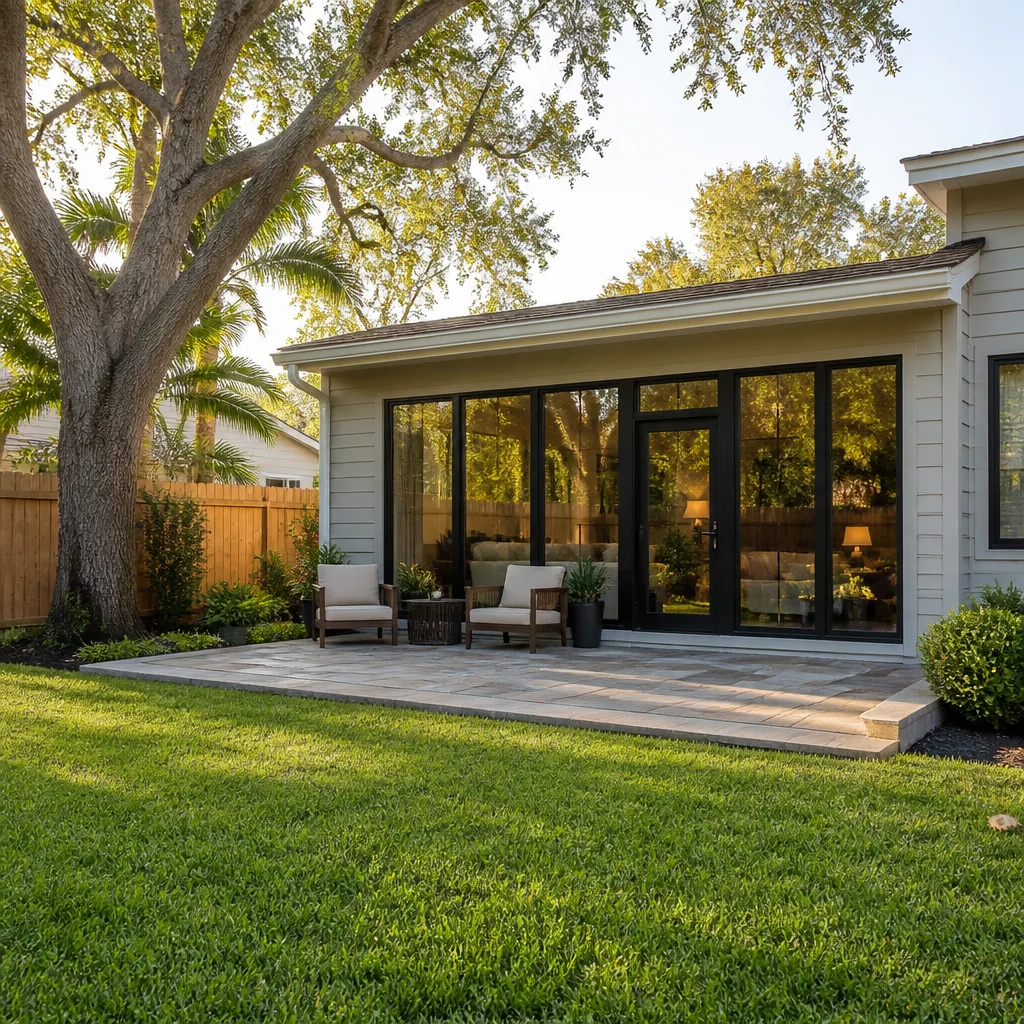
CertainTeed doesn’t sell a single “home addition” product. The brand covers a range of building materials that go into additions and ADUs, and each line has its own compatibility rules. The big ones we work with in San Jose:
- CertainTeed drywall: Standard 1/2″ and 5/8″ panels, plus Type X fire-rated board. ADUs in San Jose commonly require Type X on the shared wall between the main house and the accessory unit because of fire separation codes. If your addition has standard board where Type X belongs, that’s a code violation waiting to be flagged on resale.
- CertainTeed insulation: The primary lines are fiberglass batts (Sustainable Insulation) and the SMART vapor retarder system. The batts are sized for standard 16″ and 24″ on-center framing. In San Jose’s climate zone, the vapor retarder orientation matters: install the SMART membrane on the wrong side of the wall cavity and you get trapped moisture inside the framing. That’s a slow failure that shows up as musty drywall and peeling paint about two to three years later.
- CertainTeed siding: The CedarBoards and Monogram lines are common on San Jose additions. These are vinyl and insulated vinyl products with specific expansion allowances at the J-channel. Vinyl siding expands and contracts with temperature swings. San Jose’s hot summer afternoons and cool nights mean an addition sided too tightly in January will buckle by July. You need a 1/4″ gap at every receiving channel, and that gap disappears if the original installer nailed the panel too tight.
- CertainTeed roofing underlayment and shingles: DiamondDeck and RoofRunner underlayments go under shingles on addition roofs. If the underlayment is torn, or if the shingles weren’t nailed in the correct nail line, you get leaks at the transition point where the addition roof ties into the original roofline. That’s the most common failure point we see on additions in Willow Glen and Cambrian Park.
How do you identify what you have? CertainTeed prints product codes on the back of drywall panels and on the face of insulation batts. Siding has a manufacturing stamp on the lock leg. If you can’t read the code, take a photo of the failed area and the surrounding material and we’ll tell you what you’re looking at before we quote anything.
Styles & brands we work with







Signs Your CertainTeed Home Additions & ADU Is Failing
- Drywall cracking along the seam between the addition and the original house. Additions settle differently than the original foundation. If the drywall was installed without a control joint or isolation joint at that transition, the crack isn’t a drywall problem. It’s a framing movement problem telling you the addition wasn’t tied to the existing structure the right way.
- Musty smell or damp spots on the lower 12 inches of finished walls. In San Jose, this almost always means the sill plate was set directly on concrete without a moisture barrier, or the CertainTeed insulation is wicking water from below. By the time you smell it, the bottom plate may already be soft. That’s a structural repair, not a drywall patch.
- Vinyl siding panels that bow outward in the middle of the wall. This is the expansion problem we mentioned. The panel was nailed too tight, and San Jose’s afternoon heat pushed it past its tolerance. Releasing the panel and re-nailing it correctly fixes it. Ignoring it means the panel will eventually crack at the nail slots, and water gets behind it.
- Drafty rooms in the addition even when the HVAC is running. Insulation batts that were compressed into the cavity lose most of their R-value. CertainTeed fiberglass works by trapping air. If the batt is folded, pinched around electrical boxes, or just missing a 6-inch strip along the top plate, you lose a surprising amount of conditioned air through the wall. A thermal camera check finds this in about ten minutes.
- Water stains at the roofline transition, especially after Santa Cruz mountain storms blow in. The flashing detail where an addition roof dies into the original wall is the most common leak we fix. It’s rarely the CertainTeed product failing. It’s the flashing that was never correct, or the underlayment that got torn during installation and was never repaired.
See the difference
 Before
 After
After Before
 After
After Before
 After
AfterReplacement Cost & What’s Included
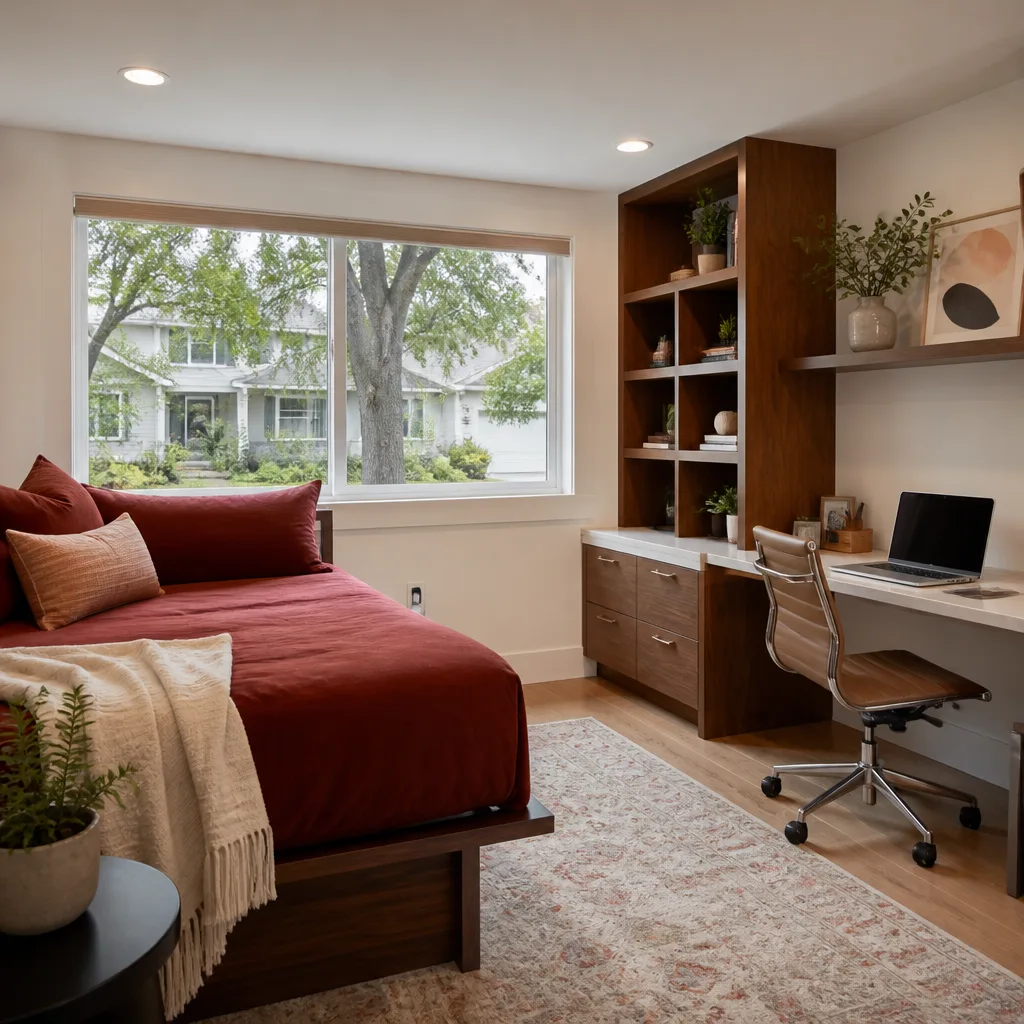
Most homeowners don’t call us because one drywall panel failed. They call because a system in the addition failed, and fixing it properly means opening a wall or a section of roof. Here’s what that costs in San Jose:
- Drywall repair with texture matching in an addition: $945 – $2,950 depending on square footage and whether we’re matching a hand-troweled texture or a standard orange peel.
- Insulation removal and replacement in an addition or ADU wall: $2,360 – $5,900 for a typical room-sized wall, including disposal of the old batts and air-sealing around the electrical boxes.
- Siding repair or partial replacement on an addition: $1,180 – $4,720 depending on whether we’re releasing and re-nailing existing panels or replacing destroyed panels with matching CertainTeed product.
- Full addition build, CertainTeed materials throughout the shell: $53,100 – $153,400. The spread comes down to square footage, whether you’re on a raised foundation or slab, and the finish package inside.
- ADU construction (garage conversion or new detached build): $106,200 – $259,600. This includes plans, permits, foundation, shell, and mechanical rough-in. CertainTeed drywall and insulation standard, siding optional.
Every quote includes the part or material, the labor to remove whatever failed, the labor to install the replacement correctly, cleanup, and the 365-Day Done Right Promise in writing. If the repair fails inside a year, we return and fix it at no charge. That’s not a slogan. It’s in the contract.
DIY or Call Us?
There are things you can safely check. You can look at the drywall seams and note where cracks are running. You can press gently on a bowed siding panel to see if it moves. You can shine a flashlight into an outlet box and see if insulation is visible in the cavity. None of those require tools or risk.
What you should not do is open a wall or a roof section to diagnose it yourself. Once drywall is open, you’ve exposed framing, possible mold, and possibly structural damage. Siding work involves working on ladders and around window openings. Roof transition repairs mean being on an addition roof, which is usually sloped enough to be genuinely dangerous. And all of this work is permitted in San Jose. If you do it yourself and it’s wrong, you pay twice: once for your materials, once for us to undo it and do it correctly. Give me the real problem and I’ll give you the real number. Call us at (669) 274-2362 and we’ll send someone who knows what they’re looking at. The visit to look is free.
FAQs
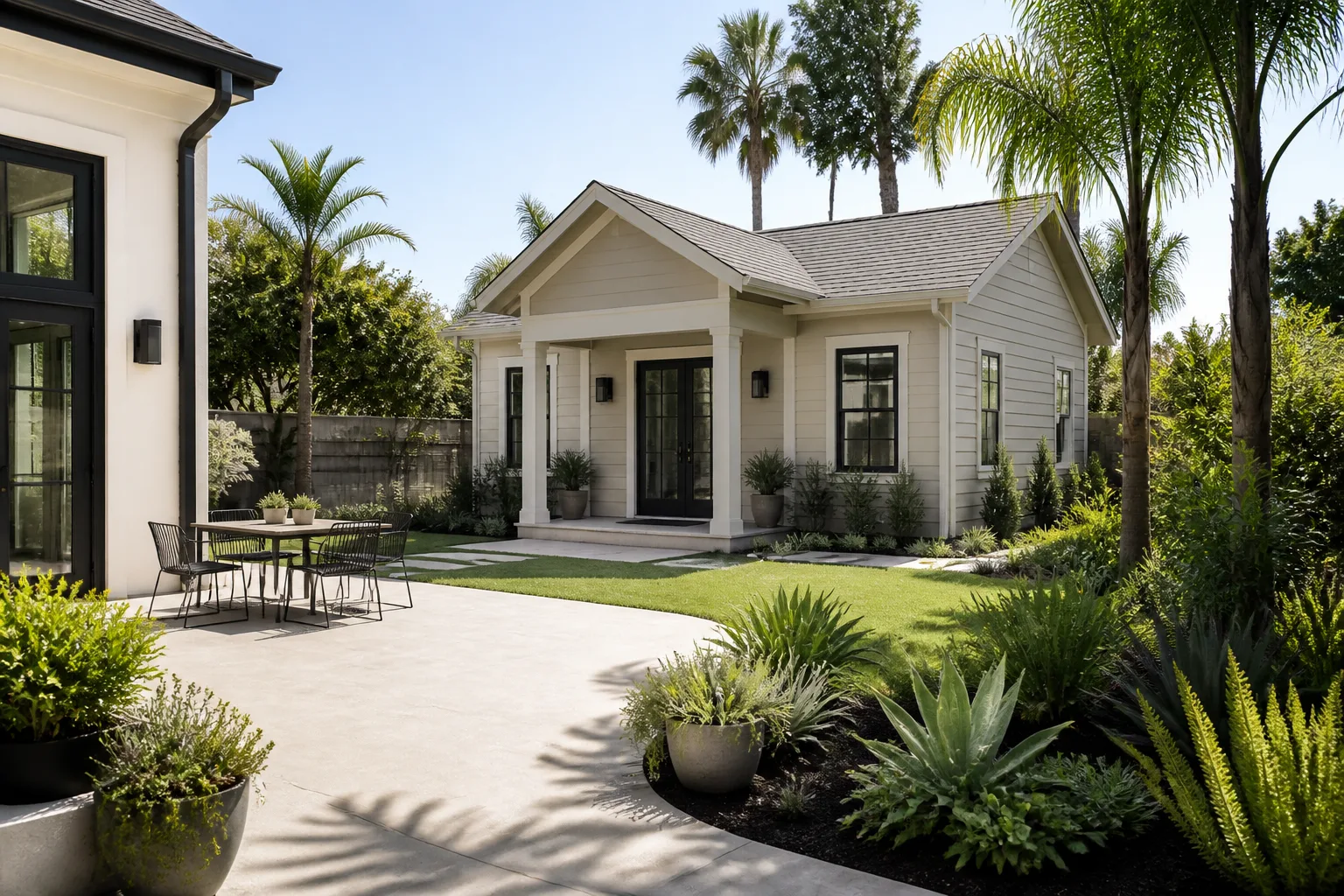
CertainTeed drywall and insulation should last the life of the building if installed correctly and kept dry. Vinyl siding carries a lifetime limited warranty, but the real-world service life in San Jose’s sun is 20 to 30 years before color fade makes replacement worth considering. The weak points in an addition aren’t usually the CertainTeed products themselves. They’re the transitions: where the addition meets the old house, where the roof ties in, and where the foundation meets the framing. Call (669) 274-2362 and we can tell you if what you’re seeing is a product failure or an installation failure.
Sometimes. A single cracked drywall seam can be repaired, re-taped, and re-textured. A few buckled siding panels can be released and re-nailed. But if you have moisture damage behind the wall, the repair is the whole wall section: remove the wet material, dry the framing, replace the insulation, and close it back up. We’ll tell you which situation you have before we quote anything. The estimate is free, and the price we give you is the price on the invoice.
Insulation replacement in one wall takes one day. Drywall repair with texture matching takes one to two days depending on dry time. Partial siding replacement takes one to three days. A full addition build is four to six months, and an ADU is six to ten months from permit approval to final inspection. We’ll give you a written schedule with the written price, and we’ll show up in the window we gave you.
We keep standard CertainTeed drywall, Type X board, insulation batts in the common widths, and matching siding accessories on hand or available same-week through our local supplier partners in San Jose. Specialty colors and profiles are ordered per job with a lead time of one to two weeks. We also work with KraftMaid and Wellborn cabinetry, Cambria and Silestone countertops, and the other trade brands that finish out an addition or ADU. Call (669) 274-2362 and we’ll tell you what’s available and when we can start.
Written by Trevor Nash, Owner, Penhallow Remodeling San Jose at Penhallow Remodeling San Jose, serving San Jose and nearby areas.


