
Free written scope consultation - allowances, timeline, and change-order rules on paper before a single trade is scheduled
Sakrete Home Additions & ADU: The San Jose Owner’s Guide
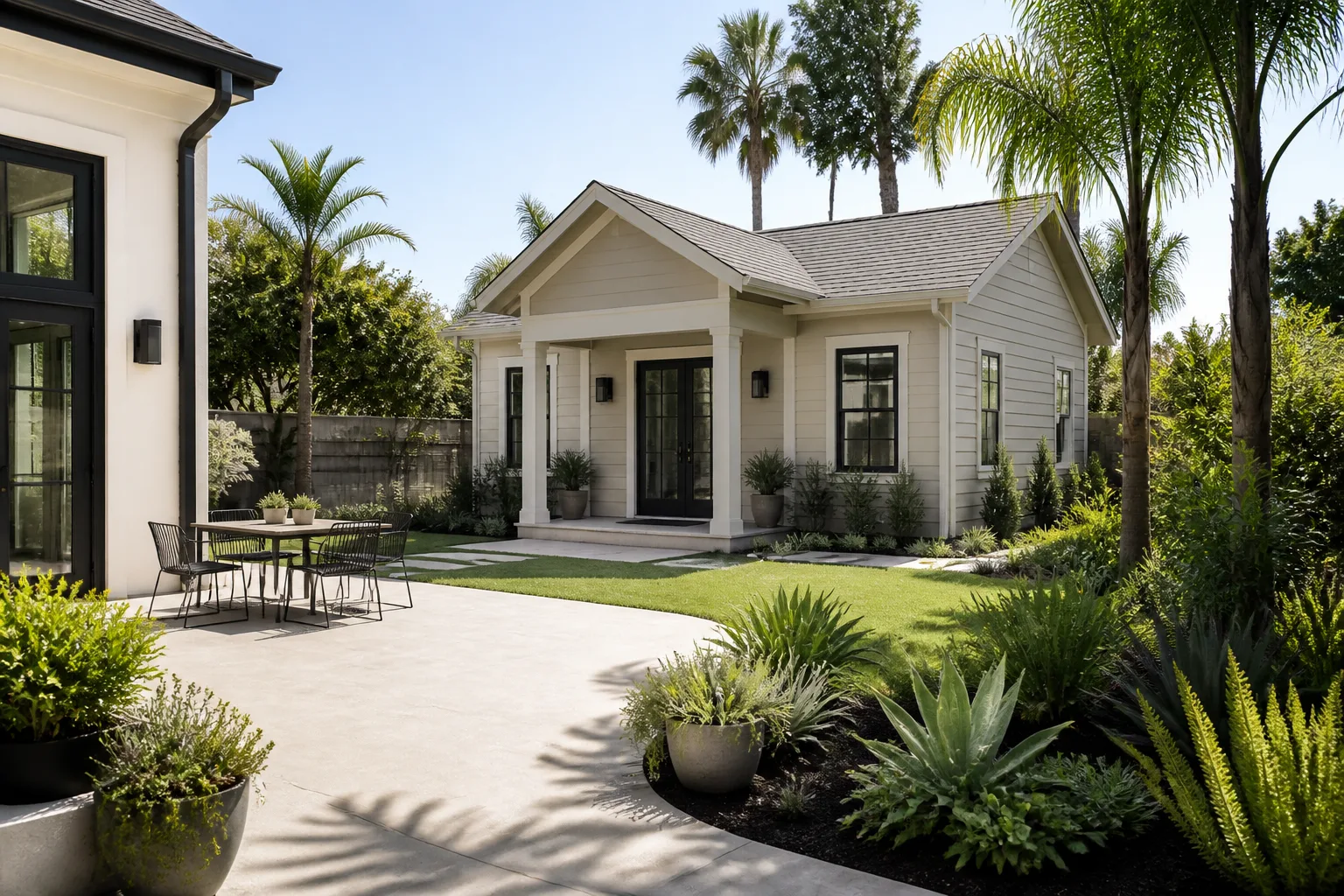
If you’re planning a home addition or ADU in San Jose and you’ve been told Sakrete products are part of the equation, here’s the straight answer: Penhallow Remodeling San Jose designs and builds additions and ADUs on Sakrete-ready foundations and slabs, with a typical San Jose project running $53,100 to $153,400 for an addition and $106,200 to $259,600 for a full ADU. Most owners reach out to us after a concrete pad or footing has cracked, settled, or been poured incorrectly by a previous contractor, and they need someone to assess whether the failed concrete can be salvaged or has to come out. We’re an independent remodeling and construction company, not affiliated with Sakrete, and we give you a written price before a single tool leaves the truck.
Key Takeaways
- Typical San Jose home addition cost: $53,100 – $153,400, depending on size, foundation condition, and finish level.
- Typical San Jose ADU construction cost: $106,200 – $259,600, driven mostly by utility connections and site access.
- Sakrete products we work with: concrete mixes, repair mortars, and resurfacing compounds used for footings, slabs, and stem walls.
- We stock common Sakrete-compatible repair materials on our trucks for foundation patches and leveling work during a remodel.
- Every project gets a written price and a written 365-Day Done Right Promise before work begins.
Trevor Nash grew up in Los Angeles and has spent the better part of two decades running remodeling and construction projects, including a stretch of kitchen and bath gut-jobs in San Jose’s Willow Glen neighborhood. When it comes to additions and ADU foundations, his rule is simple: “Give me the real problem and I’ll give you the real number.”
Styles & brands we work with







Which Sakrete Models This Applies To
Sakrete doesn’t make a single “home addition” product. What San Jose homeowners actually encounter on addition and ADU projects is a family of Sakrete concrete and repair products: Sakrete High-Strength Concrete Mix, Sakrete 5000 Plus, Sakrete Top’n Bond, and Sakrete Flo-Coat. The one you need depends on what failed. A cracked slab under an existing addition might only need Top’n Bond patching compound, while a new ADU footing should be poured with 5000 Plus for its higher compressive strength. The compatibility gotcha most people miss: Sakrete High-Strength Concrete Mix and 5000 Plus are not interchangeable for structural footings. Building code in San Jose requires a minimum compressive strength, and 5000 Plus is rated for 5,000 psi while standard High-Strength mix tops out lower. If a contractor poured standard mix where 5,000 psi was specified, that’s a red flag we see often during inspections.
How to identify what you have: check the bag label for the product name and the date code on the side. Sakrete bags have a “manufactured on” stamp, and concrete mix older than about a year should not be used for structural work, even if the bag was never opened. For aftermarket equivalents, Quikrete makes competing products with similar specs, but we don’t mix brands on a single structural pour. If the job calls for Sakrete, we use Sakrete. The bag is cheap. A failed footing isn’t.
Signs Your Sakrete Home Additions & ADU Is Failing
Concrete failure rarely announces itself all at once. Here’s what San Jose owners typically notice first:
- Hairline cracks spreading across the slab. This is usually shrinkage from drying too fast in San Jose’s warm, dry summers, but if the crack widens beyond about 1/8 inch or one side of the crack sits higher than the other, the slab is settling and the soil underneath is moving.
- A new addition pulls away from the main house. This shows up as a widening gap along the seam where the addition wall meets the original exterior wall. In San Jose’s clay-heavy soil, this is often from differential settlement: the addition’s footing sheds water differently than the original foundation.
- Cracks running up through walls or ceiling corners. When a slab fails, the framing above it moves too. Diagonal cracks at door and window corners are the classic early sign of a foundation problem that started in the concrete.
- Water pooling near the base of the addition after rain. San Jose doesn’t get much rain, but when it arrives, it arrives fast. Poor drainage beside a slab will erode the soil under it over a few seasons, and the concrete eventually sinks.
- Crusty white deposits on the concrete surface. That’s efflorescence, mineral salts wicking up through the slab. It means water is moving through the concrete, and water moving through concrete is slowly dissolving the cement paste that holds it together.
See the difference
 Before
 After
After Before
 After
After Before
 After
AfterReplacement Cost & What’s Included
In San Jose, a full home addition typically runs $53,100 to $153,400. An ADU runs $106,200 to $259,600. That range exists because every project is different: the size of the footprint, the condition of the existing soil, the number of plumbing and electrical connections, and whether you’re tying into an existing structure or building free-standing. If the Sakrete portion of the job is a failed slab that needs to be saw-cut, removed, and re-poured, that’s typically $5,310 to $14,160 for a modest footprint, including rebar, vapor barrier, and inspection.
What’s included in our price: the written scope, the materials list, the permit fees, the labor, the concrete, and the cleanup. You get a written price before any work starts, and that number is the number on the invoice. If we find something unexpected when we open up the slab, we stop and hand you a written change order before we proceed. The 365-Day Done Right Promise covers the concrete work and everything we attach to it. If it cracks, settles, or fails inside that year, we come back and fix it at no charge.
DIY or Call Us?
You can absolutely patch minor surface cracks in a Sakrete slab yourself with a $20 box of Sakrete Top’n Bond and a margin trowel. If the crack is hairline, not moving, and no deeper than about a quarter inch, a homeowner can buy a couple of quiet weekends and fix it. What you should not DIY is structural concrete. Cutting out and re-pouring a failed footing or slab under an addition or ADU involves saw-cutting, rebar placement, proper compaction, moisture control, and a city inspection in San Jose. Get the compaction wrong and the new slab sinks faster than the old one. Get the rebar wrong and the slab cracks at the corners. The cost of fixing a botched structural pour is usually two to three times the cost of doing it right the first time.
If you’re not sure whether your slab problem is surface or structural, call us at (669) 274-2362. We’ll look at the crack, tell you what you’re dealing with, and give you a written price either way. The assessment is free.
FAQs
In San Jose’s climate, a properly poured and compacted concrete slab under an addition or ADU should last 40 to 50 years before showing structural problems, though surface wear shows up sooner. The big variable is drainage. We’ve removed slabs that were 30 years old and looked terrible, and we’ve re-poured slabs in Santa Clara County where the original was still doing fine after 50 years. If the soil underneath stays dry and stable, the concrete stays stable. Call us at (669) 274-2362 if you want us to evaluate your slab before you build on it.
It depends on the failure. Surface cracks and shallow spalling can usually be repaired with a Sakrete patching compound or resurfacer, and that work is measured in hundreds, not thousands. But if the slab has settled more than about half an inch, or if cracks run through the full depth of the concrete, patching just buys time. In San Jose’s expansive clay soils, a settled slab usually keeps moving until the drainage issue underneath it is fixed. We’ll tell you which situation you have before we quote anything.
For a typical single-room addition footprint in San Jose, removing the old slab, re-compacting the base, setting forms and rebar, and pouring the new slab takes 5 to 7 working days, including the required city inspection for structural concrete. Concrete needs 7 days to reach about 75 percent of its design strength and 28 days for full cure, so framing on top of the new slab begins about a week after the pour. We’ll give you a written schedule before we start, and we’ll show up when we said we would.
We keep Sakrete Top’n Bond patching compound, Sakrete Flo-Coat resurfacer, and Sakrete High-Strength Concrete Mix on our trucks for slab repairs and small pours during additions and ADU work in San Jose. For structural footings that require a 5,000 psi mix, we order Sakrete 5000 Plus fresh from our local supplier, usually a day before the pour. We also work with brands like KraftMaid, Cambria, and Silestone on the finish side of the project, but the concrete under your addition is either Sakrete or a matching spec we’ve documented in writing.
Written by Trevor Nash, Owner, Penhallow Remodeling San Jose at Penhallow Remodeling San Jose, serving San Jose and nearby areas.


