
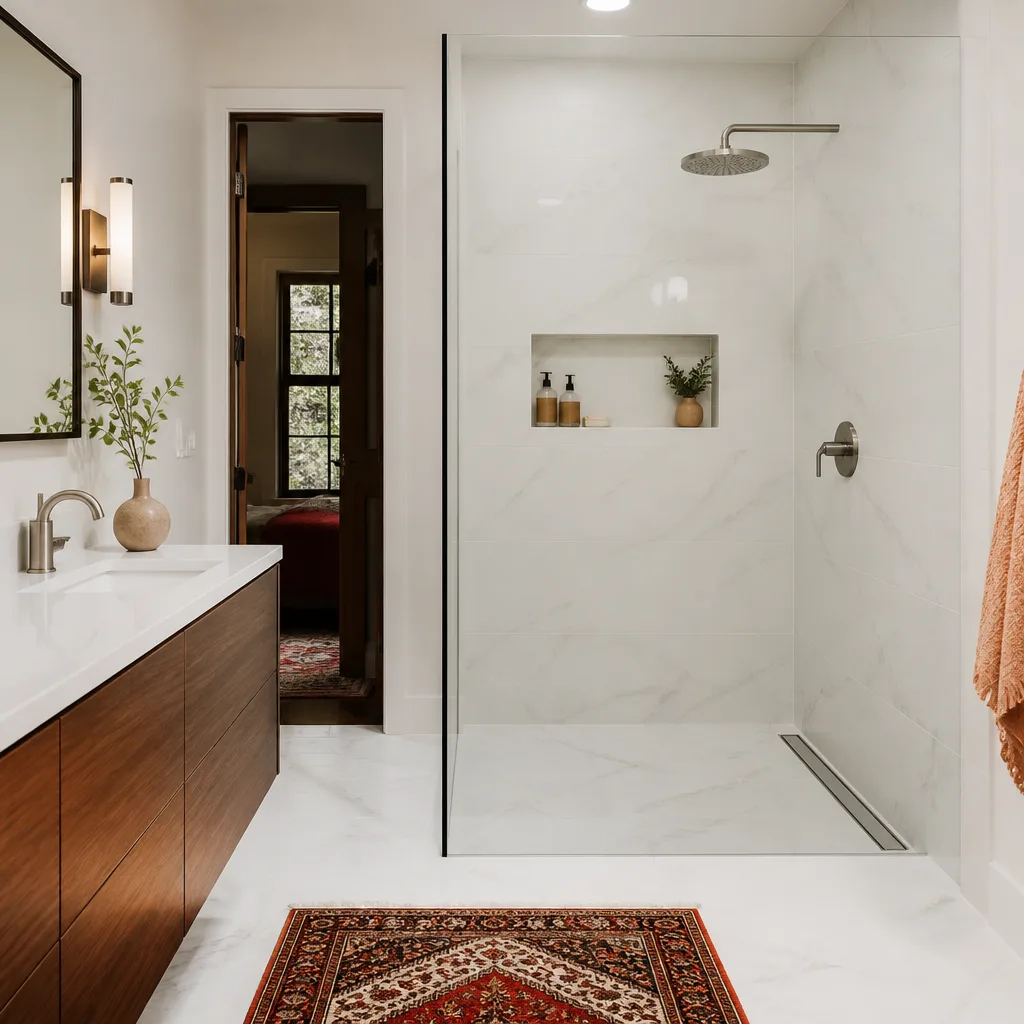
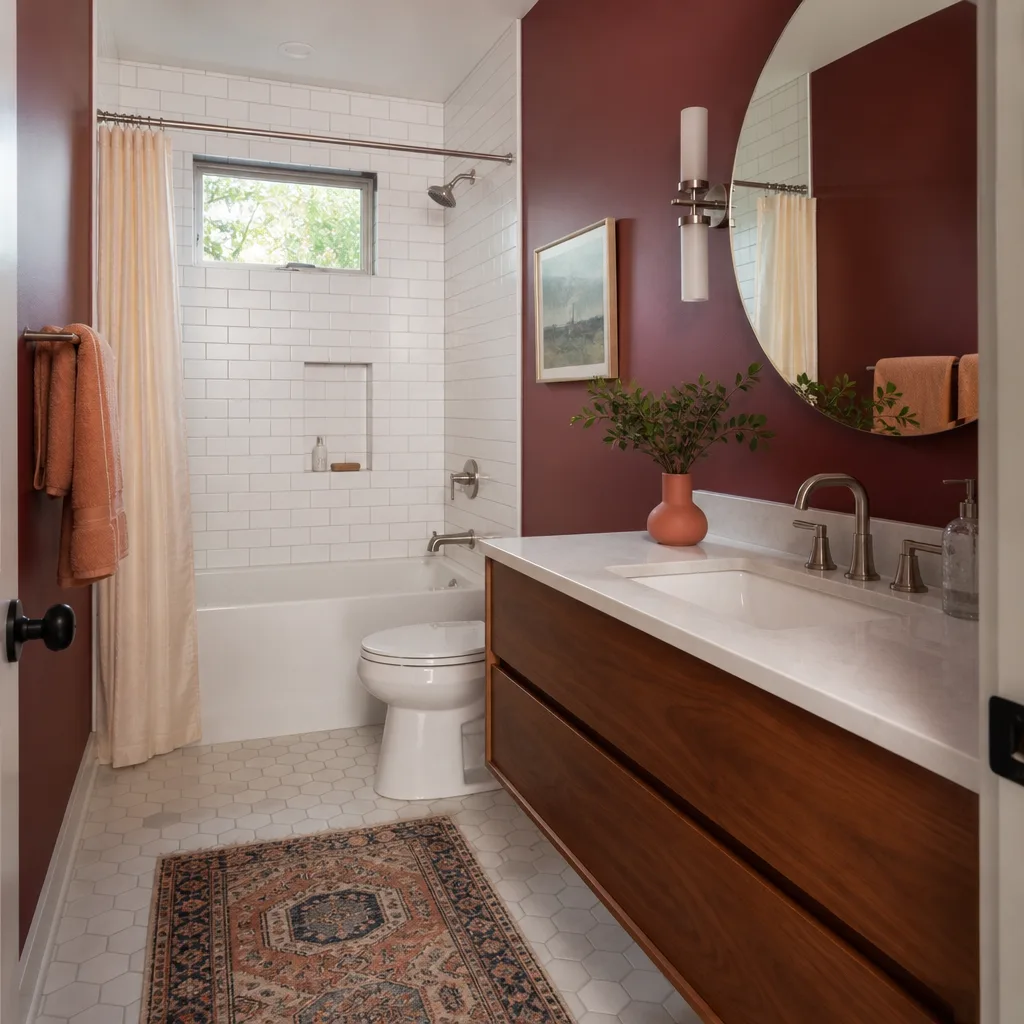
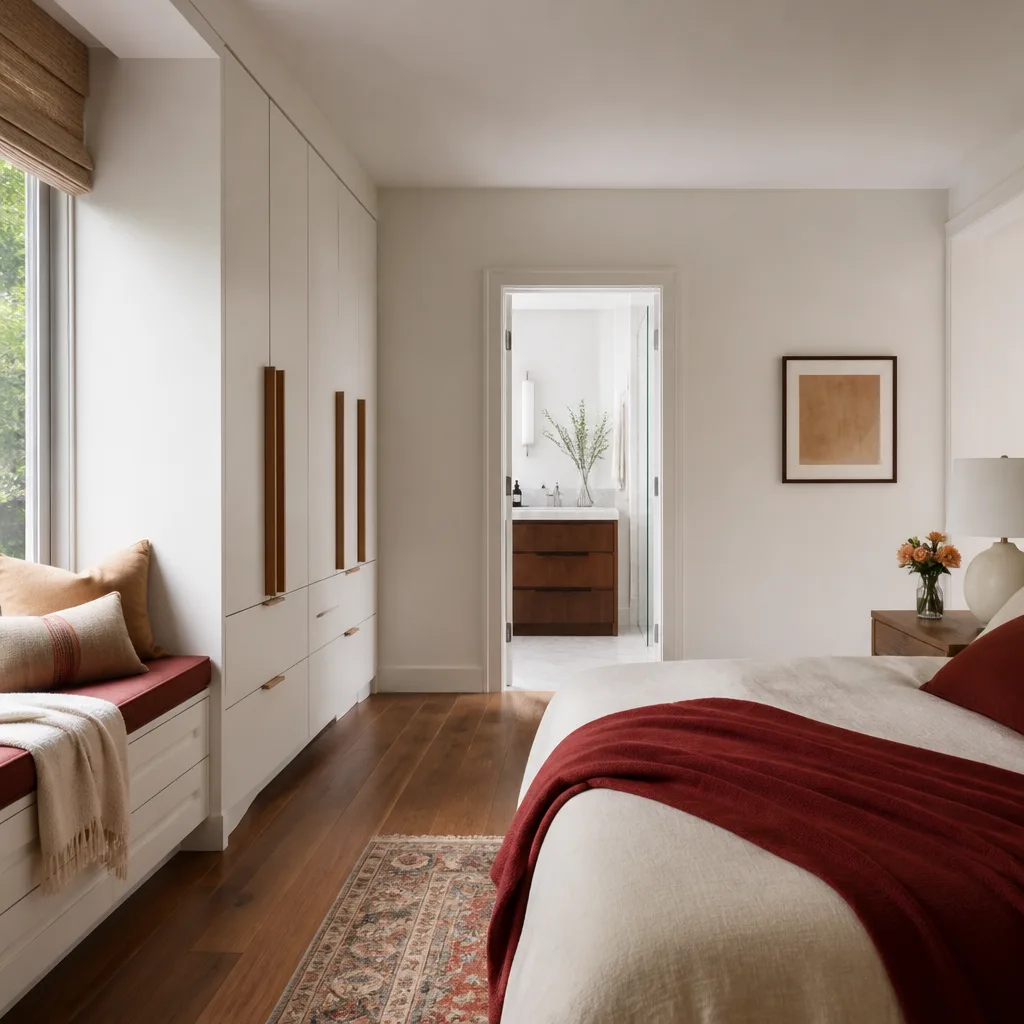
Free written scope consultation - allowances, timeline, and change-order rules on paper before a single trade is scheduled
Therma-Tru Bathroom Remodeling: The San Jose Owner’s Guide
If you’re searching for Therma-Tru bathroom remodeling in San Jose, here’s the straight answer: we install Therma-Tru-compatible doors, trim kits, and threshold systems as part of full and partial bathroom remodels, and the work typically runs $10,620 – $33,040 depending on scope. We’re an independent contractor, not a Therma-Tru dealer, but we work with their product lines regularly and stock common replacement hardware on our trucks. Most San Jose homeowners call us because a Therma-Tru door has warped, a threshold has cracked, or the original install is now leaking at the base after years of steam and hard water exposure.
What we see most often: the corner seal pad on a Therma-Tru fiberglass door has compressed or torn, and moisture is now getting past the sweep. The door still looks fine from the living room side, but the bottom rail is swelling and the threshold is starting to pit from standing water. That’s a repair we handle regularly, and it’s usually the difference between a $400 fix and a $4,000 door replacement if the owner catches it early. Trevor Nash, who runs Penhallow Remodeling San Jose, will tell you the same thing he told the last homeowner in Willow Glen: give me the real problem and I’ll give you the real number.
Here’s what you need to know about Therma-Tru parts in San Jose, what fails, what it costs, and how fast we can turn it around.
Which Therma-Tru Models This Applies To
Therma-Tru makes three product families that show up in San Jose bathrooms: the Classic-Craft and Fiber-Classic exterior door lines (often used for bathroom-to-backyard access, particularly in older Willow Glen and Rose Garden homes), the Benchmark line (more common in newer construction and ADUs), and the Slim-Line sliding patio door systems. For bathroom work specifically, we’re usually dealing with a Fiber-Classic or Benchmark door, and the compatibility question comes down to two measurements: the door slab thickness (1-3/4″ on nearly all Therma-Tru bathroom doors) and the threshold profile.
The compatibility gotcha we see repeatedly: Therma-Tru thresholds are not universal. The Benchmark line uses a different sill profile than the Fiber-Classic line, and the original 2005-era thresholds don’t accept the current replacement deck screws without a conversion kit. If you have the original paperwork, the door’s serial number is on a sticker on the hinge-side edge of the slab. If the sticker is gone (it usually is after ten years of bathroom steam), measure the threshold width from the interior face to the exterior face. A true 4-9/16″ sill tells us it’s a Benchmark; a 5-1/4″ or 5-3/4″ sill tells us Fiber-Classic. That one measurement narrows the parts list from 40 options to about six.
On the OEM-vs-aftermarket question: Therma-Tru’s own replacement parts (sweeps, corner pads, cam locks, threshold inserts) are well made, but the aftermarket options from companies like Endura and Porta-Parts are often equal quality at 30-40% less. We stock both. For weather-critical pieces like the corner seal pad and the bottom sweep, we use OEM whenever the door is under a permit inspection or the homeowner specifically wants the Therma-Tru brand on the invoice. For interior non-weather pieces like hinge bushings and strike plates, we’ll recommend the aftermarket equivalent and pass the savings on.
One more thing worth knowing if you live in San Jose: the 2019 update to California’s Title 24 energy code changed what’s code-compliant for any exterior-facing bathroom door. If the opening is more than 50% glass, the glass pack has to meet a specific U-factor. Original Therma-Tru doors from 2015 and earlier often don’t. We flag this during the estimate so you’re not surprised when the permit review comes back.
Styles & brands we work with







Signs Your Therma-Tru Bathroom Remodeling Is Failing
Here are the five things we diagnose most often in San Jose homes, and what’s actually going on behind each symptom:
- Water staining at the bottom interior corners. This is almost always the corner seal pad. Those little rubber triangles compress over time, especially on south-facing doors that get direct afternoon sun on the exterior side. Once they flatten, water runs down the door face and hooks around the slab edge into the house.
- The door sticks at the top edge in winter. San Jose’s winter rain season raises ambient humidity, and a fiberglass slab will expand enough to bind at the header if the reveal was set too tight. The cause is usually the original install, not the door. We reset the slab with a proper 1/8″ reveal and it stops.
- The threshold rocks or clicks when you step on it. The adjuster screws under the tread cap have either loosened or stripped. On Benchmark thresholds, those screws thread into plastic inserts that crack after a few years of foot traffic. It’s a $30 part and a 20-minute fix unless the subfloor under the threshold has started to rot from the movement.
- You can feel a draft at the sweep even when it’s latched. The bottom sweep loses its memory. Therma-Tru sweeps are made from a foamed thermoplastic that degrades slowly, and after seven or eight years in a steam-heavy bathroom, it won’t spring back to meet the threshold. San Jose’s dry summer air accelerates the oxidation on the exterior side.
- The door face is fine but the hinge-side edge is darkened or softened. Steam from shower use gets drawn into the hinge mortise area and the factory edge seal fails slowly. We see this most on bathrooms without a properly vented exhaust fan. The fix is removal, edge re-sealing, and reinstalling with sealed hinge mortises.
If you’re seeing any of this, don’t wait too long. A door that’s failing at the bottom or the hinge edge is letting moisture into framing that is significantly more expensive to repair than the door itself.
See the difference
 Before
 After
After Before
 After
After Before
 After
AfterReplacement Cost & What’s Included
In San Jose, the cost of work involving Therma-Tru bathroom doors falls into three tiers. A threshold and sweep replacement (the most common repair) runs $275 – $650 installed. A full door slab replacement with new sweeps, pads, and threshold runs $1,400 – $3,200 depending on whether we’re reusing the existing frame or pulling the old one. If the frame is compromised and the opening needs to be rebuilt, you’re looking at $4,800 – $8,900 as part of a broader bathroom remodel, which is where the full $10,620 – $33,040 range comes in for a complete bathroom gut and rebuild that includes the Therma-Tru door work.
| Scope | Typical Range | What’s Included |
|---|---|---|
| Threshold & sweep replacement | $275 – $650 | Parts, labor, sealant, cleanup |
| Door slab replacement | $1,400 – $3,200 | Slab, hardware, threshold, weather seals, install |
| Frame rebuild + door | $4,800 – $8,900 | Pulls, frame, slab, threshold, trim, flashing, permit coordination |
| Full bathroom remodel with Therma-Tru door | $10,620 – $33,040 | Permits, demo, rebuild, tile, fixtures, door, finish work |
The range depends on three things: whether the original frame is still sound, whether we’re matching an existing finish (stained fiberglass is easier; painted finishes cost more to match), and whether the opening is subject to Title 24 energy requirements that force a glass-pack upgrade. You get a written price before we start, and it’s the price you pay. If something shifts during demo, we stop and put the change in writing before continuing. No surprises on the invoice.
Every installation is covered by our 365-Day Done Right Promise. If the door binds, leaks, or fails within a year of our install, we come back and fix it at no charge. That’s a written promise, not a verbal one.
DIY or Call Us?
Some of this work is genuinely doable for a homeowner with patience and a stud finder. Replacing a Therma-Tru bottom sweep is a 15-minute job if you order the right part number and the existing fasteners come out cleanly. Adjusting the threshold cap screws is also safe. Rebuilding a threshold, resetting a door slab, or dealing with a compromised frame is not DIY work. A door that leaks at the threshold is dumping water into subfloor and rim joist; by the time you can see rot from inside the house, the repair has already tripled in cost.
The dangerous parts here aren’t spring-loaded like a garage door, but the failure mode is structural. If you’re in San Jose and the door hasn’t been right since the last big storm cycle, call us at (669) 274-2362 and Trevor will walk you through what he’s likely seeing before we even come out. The estimate is free, and you’ll get a written number before any work is scheduled.
FAQs
A properly installed Therma-Tru door in San Jose typically lasts 20 – 30 years on the slab itself, but the weather seals (sweeps, corner pads) need replacement every 5 – 8 years because of our combination of dry summers and rainy winters. The slab is fiberglass and won’t rot; what fails is everything that seals it to the frame.
Yes, in most cases. If the slab is sound and the frame isn’t soft, we repair with new seals, a new threshold, and often a hinge reset. About 70% of the Therma-Tru bathroom doors we evaluate in San Jose end up being repaired, not replaced. Call (669) 274-2362 and we’ll tell you honestly which side of that line you’re on.
Most threshold and seal replacements take two to three hours on site, including removing the old threshold, inspecting the subfloor beneath it, installing the new sill with proper flashing, and re-sealing the door slab. If there’s hidden subfloor damage, we’ll stop and put the additional scope in writing before proceeding.
We stock common Therma-Tru sweeps, corner pads, threshold caps, and adjuster screw kits on our trucks, and we keep a working inventory of the most common slabs in the San Jose service area. If we need to order a specific finish-matched slab, it’s usually three to five business days from order to install.
Written by Trevor Nash, Owner, Penhallow Remodeling San Jose at Penhallow Remodeling San Jose, serving San Jose and nearby areas.


