
Last updated October 15, 2026



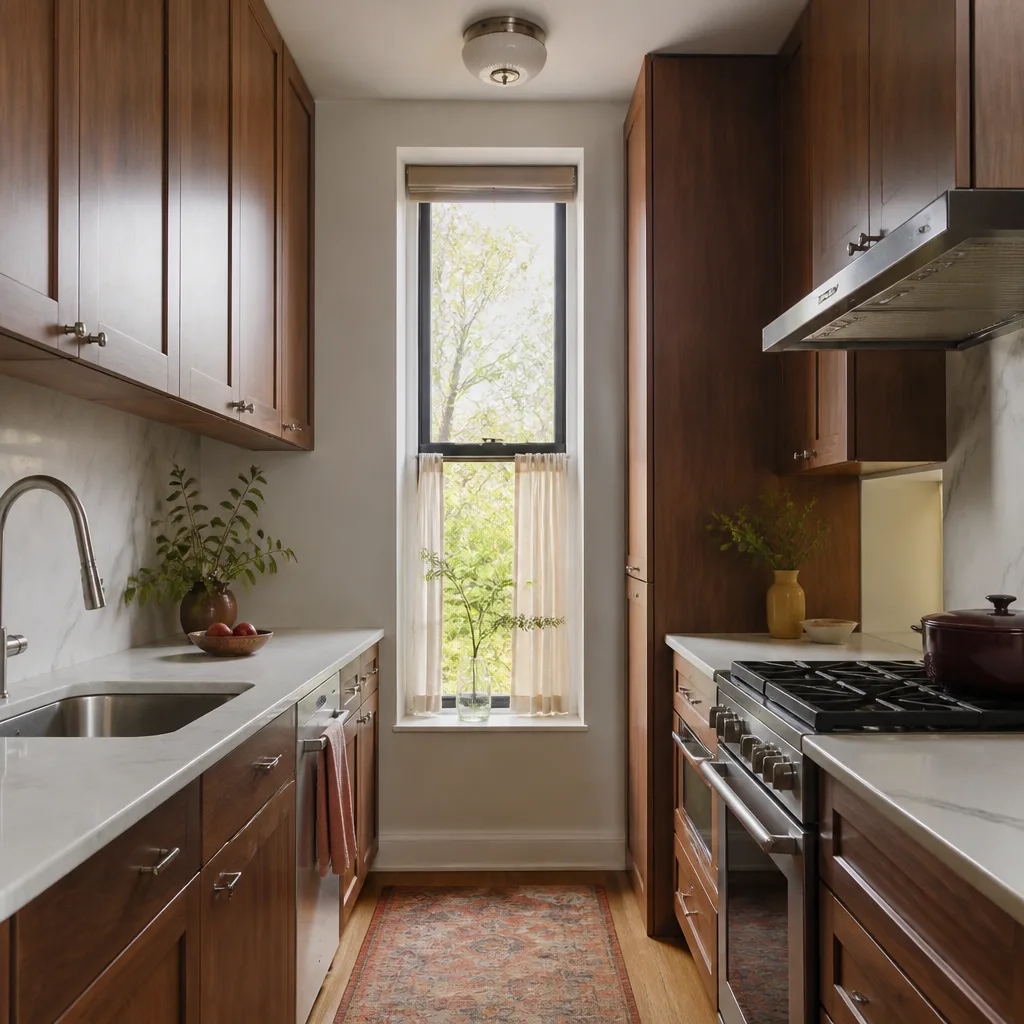

Free written scope consultation - allowances, timeline, and change-order rules on paper before a single trade is scheduled
How to Hire a Construction Contractor in San Jose: A Step-by-Step Guide
California’s Contractors State License Board counts roughly 1,100 licensed general contractors operating in Santa Clara County, and every one of them carries a six-digit license number. That number tells you a contractor can legally pull a permit in San Jose. It says nothing about whether they’ll show up inside the arrival window they promised, keep the price they quoted, or come back in six months when a crack appears in the grout line. This guide walks through the full hiring process, from checking a license to reading a contract clause by clause, with the specific details that matter in San Jose’s market and housing stock. For more guides & resources, see our blog.
Styles & brands we work with







Quick Answer
Hiring the right construction contractor in San Jose comes down to five steps: verify the CSLB license and insurance in writing, get a written price (not a verbal estimate) before any work starts, read the contract’s guarantee and payment clauses word by word, confirm the arrival and scheduling terms in writing, and structure payment so you never pay ahead of completed, inspected work. The single most protective step is getting the price and the guarantee in writing before demo day, because verbal estimates in this market change at the door more often than most contractors will admit.
Table of Contents
- How to Verify a San Jose Contractor’s License and Insurance in Under Five Minutes
- Bid, Estimate, or Not-to-Exceed: What Each One Actually Means in San Jose
- The Contract Clauses That Matter Most: What a Real Guarantee Looks Like
- Arrival Windows and Scheduling Commitments: Red Flags That Signal a Dragging Job
- How to Structure a Payment Schedule That Protects You
- San Jose-Specific Factors: Permits, Climate, and Housing Stock
- Common Mistakes to Avoid
- When to Call a Professional
- Frequently Asked Questions
- The Bottom Line
How to Verify a San Jose Contractor’s License and Insurance in Under Five Minutes
Start at the CSLB website, not at the contractor’s own site. Every licensed contractor in California has a public record you can pull in about two minutes. Type in the license number they gave you, and check three things: that the license is current and active, that the name on the license matches the person or company you’re actually dealing with, and that there is no outstanding disciplinary action. A suspended license is obvious, but a license with an expired workers’ compensation exemption is just as serious and far easier to miss.
Insurance is the step most homeowners skip entirely, and it’s the one that can put your homeowner’s policy at risk. Ask for a certificate of insurance directly from the contractor’s carrier, not a photocopy the contractor hands you. The certificate should name you as the certificate holder, list general liability coverage (typically at least $1 million per occurrence for a San Jose remodel), and show workers’ compensation coverage if the contractor has employees. In California, a contractor without workers’ comp coverage who gets injured on your property can come after your homeowner’s insurance for medical costs. That lapsed coverage is your liability, not theirs.
Here’s the five-minute checklist, in order:
- Go to the CSLB license lookup page and enter the license number. Confirm the status says “active” and the expiration date is in the future.
- Match the business name on the license to the name on the contract. DBA names and subcontractor arrangements should be explained in writing.
- Click the “workers’ comp” tab. If it shows an exemption, ask why. A one-person operation can legally be exempt, but a crew of three cannot.
- Request a certificate of insurance emailed from the contractor’s carrier. It takes most agencies ten minutes to issue.
- Look for any “discipline” or “complaint” section in the license record. Not every complaint means disqualification, but you want the full picture before you sign.
What lapsed coverage actually means, in plain terms: if a contractor’s workers’ comp policy expires mid-job and someone gets hurt in your kitchen, the contractor’s business entity may not have the assets to cover the claim. That leaves your policy as the next target. This is not a theoretical risk. We’ve seen it happen in San Jose neighborhoods from Willow Glen to Berryessa, and it’s one of the reasons we carry current certificates on every project and encourage every homeowner to ask to see one.
If you want to see how a properly structured general contractor relationship works from the inside, our General Contractor in San Jose page explains the full scope of what a written agreement should cover, including the inspection and warranty terms that protect you after the final walkthrough.
Bid, Estimate, or Not-to-Exceed: What Each One Actually Means in San Jose
Most homeowners use the word “estimate” loosely, and contractors do the same, but in California these are three different documents with three different levels of protection. Knowing which one you’re holding changes what you can hold the contractor to when the price moves.
A bid is a fixed price for a defined scope of work. It’s the strongest pricing document a homeowner can have, and it should be generated from the contractor’s own measurements and material selections, not from the vague back-of-an-envelope square-footage math that drives most “rough” numbers. A legitimate bid in San Jose should include a line-item breakdown: demolition, framing, plumbing rough-in, electrical rough-in, drywall, tile setting, cabinetry, countertops, fixtures, permits, and a contingency line of no more than 10 percent for things you cannot see until the walls are open.
An estimate is a professional guess, and in California it carries almost no legal force. It’s useful as a planning tool, but it should never be the document you sign. A contractor who will only give you a verbal estimate, or who gives you a written estimate that “could go up once we see what’s behind the drywall,” is telling you in advance that the number is not the number.
A not-to-exceed price (often written NTE) sets a maximum cap for a defined scope, with the contractor’s actual time and materials billed against it. It can work well for exploratory phases or small repair scopes, but for a full kitchen or bathroom remodel in San Jose it creates an incentive problem: the closer the contractor gets to the cap, the more profitable the job becomes. We prefer a written bid for remodel work because the conversation is cleaner. The price is the price.
Here’s the practical guidance: for any San Jose remodel over $10,000, insist on a written line-item bid. If the contractor resists, ask what specifically prevents them from pricing the job. If the answer is “we won’t know until we open the walls,” that’s a legitimate point about concealed conditions. The solution is a written protocol for change orders when concealed conditions are found, with the rate schedule for labor and materials disclosed in advance. A contractor who won’t commit to a price because of unknowns but also won’t commit to a change-order protocol is a contractor who is comfortable with the price moving in one direction only.
For a clear example of how a written price should look before you sign, see the approach we lay out on our Kitchen Remodeling in San Jose page, where every project starts with a written number, not a range or a ballpark.
The Contract Clauses That Matter Most: What a Real Guarantee Looks Like
Most contracts are long, but only a handful of clauses actually determine whether you’re protected. Reading the whole document front to back is worth doing once, but here’s how to separate the clauses that matter from the boilerplate that doesn’t.
First, the scope of work. This should be specific enough that you can walk through your house and point to every item. “Install kitchen cabinets” is not a scope of work. “Remove existing cabinets and dispose; install new KraftMaid cabinetry per plan view dated [date]; install crown molding to ceiling; adjust all doors and drawers for alignment; install hardware supplied by owner” is a scope of work. If you can’t check a line item off by looking at it, it’s too vague.
Second, the change order clause. Every contract should have one, and it should say something like: “No changes to the scope, price, or schedule shall be valid unless documented on a written change order signed by both parties, with the cost and schedule impact stated before the work is performed.” If the contract allows verbal changes or “field directives,” strike it or walk.
Third, the guarantee clause. This is where boilerplate and real protection part ways. Boilerplate says “workmanship warranted for one year.” Real guarantee language says: “Contractor warrants all workmanship for a period of 365 days from substantial completion. If any defect in workmanship appears during the warranty period, Contractor will correct it at no charge within a reasonable time of written notification, including all necessary labor and materials. This warranty covers replacement or repair of the defective work and restoration of surrounding areas affected by the repair.”
What you’re looking for is specificity: the exact length of the warranty, what triggers it, what the contractor does when it’s triggered, and whether you’ll pay a service call or diagnostic fee to have the work examined. Some warranties are written so that the trip to look at the problem costs you $150, which quietly discourages homeowners from ever making a claim. Ask the contractor to explain, in plain words, what happens when you call about a failed repair six months after the job ends. If the answer is vague, the guarantee is vague.
Fourth, the payment clause. We’ll cover this in the payment section below, but the contract should state the payment schedule explicitly: how much, at what milestone, and tied to what completion condition.
Finally, the arbitration and attorney’s fees clause. California allows contractors to include binding arbitration clauses in home improvement contracts, which can limit your ability to sue in court. Read it. Understand it. If you’re not comfortable with arbitration for disputes over $10,000, you can negotiate the clause out, but do so in writing before you sign.
The Kingswell standard we operate under follows a simple rule: say the price before the work, show up in the window we gave, leave the place cleaner than we found it. That’s the baseline a contract should capture, and everything we’ve written here maps to it.
Arrival Windows and Scheduling Commitments: Red Flags That Signal a Dragging Job
A contractor who will name a start date but not an arrival window is already telling you something about the schedule. The question isn’t whether they’ll be exactly on time every day; it’s whether their commitments are specific enough to be held against them. “We’ll be there Wednesday” without a time is not a commitment, it’s a suggestion.
The San Jose remodel market has a particular pressure that makes scheduling commitments more fragile than in other cities: labor is scarce and demand is high. A contractor running three concurrent jobs in San Jose has every incentive to pull a crew from the slower project whenever another job gets urgent. The result, familiar to homeowners from Almaden Valley to Alum Rock, is a project that drags from eight weeks to fourteen, with two weeks of silence in the middle.
Red flags, in order of how strongly they predict a dragging schedule:
- No written arrival window. “Morning” is not a window. “7:30 to 8:30 a.m.” is a window, and you can hold someone to it.
- A start date with no calendar duration. “We start June 3rd” tells you nothing. “We start June 3rd and the project will be substantially complete in eight to ten weeks, barring written change orders” is a commitment.
- No project schedule or phase breakdown. A contractor who can’t tell you what week the plumbing rough-in happens is a contractor who hasn’t planned the job.
- Crew rotation language. “We move crews between jobs as needed” is a polite way of saying “your job will be in second place some weeks.” Ask if the same crew will be on your project start to finish, or if multiple jobs will run concurrently.
- No delay notification clause. Every remodel hits a delay: a backordered countertop slab, a failed inspection, a crew member out sick. The question is how the delay is communicated. A contract should state that the contractor will notify you within 24 hours of any schedule change and provide a revised timeline.
One specific question to ask: “How many jobs are you starting at the same time as mine?” There’s a legitimate answer (two projects, staggered by a week, with dedicated crews on each) and there’s a warning sign (four or five jobs all “on the board” with one crew). The contractor’s answer, spoken out loud and then written into the contract as a scheduling commitment, tells you more than any review.
How to Structure a Payment Schedule That Protects You
California law caps the down payment a contractor can collect on a home improvement project at 10 percent of the contract price or $1,000, whichever is less. That’s the legal ceiling, not a recommendation. A contractor asking for 40 percent down before any material is ordered or any wall is opened is outside the law, and you should not feel awkward about saying so. In our experience, legitimate San Jose contractors quote around the legal standard for initial deposits and structure the rest of the schedule against specific milestones.
The principle that protects you is simple: never be fully paid ahead of completed, inspected work. That doesn’t mean you should make the contractor float the cost of your job (they won’t), but it does mean each payment should correspond to a milestone you can verify with your own eyes and, where relevant, with a city inspection sign-off.
Here is a sample payment schedule for a typical $35,000 bathroom remodel in San Jose:
- Initial deposit (10 percent / $3,500): Due at contract signing. Legal maximum in California, and covers design time, permit application fees, and ordering long-lead materials.
- Second payment (25 percent / $8,750): Due upon demolition complete and rough framing inspected and passed. You can walk through the space and see studs, plumbing rough-in, and electrical boxes in place.
- Third payment (25 percent / $8,750): Due upon drywall, tile, and flooring complete, with the work visually inspected by you before the next phase starts.
- Fourth payment (25 percent / $8,750): Due upon cabinet installation, countertop installation, and fixture trim-out complete, with a punch list walkthrough scheduled.
- Final payment (15 percent / $5,250): Due upon final inspection passed, punch list items complete, and written warranty delivered.
The percentages matter less than the principle: each payment is tied to something you can see, and the final payment is held until the city signs off and the punch list is done. A contractor who wants the final 15 percent before the final inspection passes is asking you to give up your only remaining leverage. Politely decline.
One more clause to look for: the retention clause. In commercial construction, owners routinely hold back 5 to 10 percent of each payment as retention until the end of the job. In residential remodels, it’s less common but can be requested. If you’re asking a contractor to accept retention, you’ll likely need to accept a slightly higher bid to offset their financing cost, but for a six-figure project it can be worth it.
San Jose-Specific Factors: Permits, Climate, and Housing Stock
San Jose’s building stock creates its own set of conditions that affect both cost and schedule. If you’re hiring a contractor for a remodel in this city, three local factors will influence your project more than any generic hiring advice, as covered in our Complete Guide to Construction in San Jose.
Permits and the San Jose Building Division. San Jose requires permits for most remodel work beyond cosmetic changes: structural alterations, plumbing, electrical, mechanical, and any wall relocation. The city uses an online permitting system for smaller projects, but larger remodels go through plan review, which adds two to six weeks to the front end of a project depending on current workload and the complexity of your scope. A contractor who says they can start a structural remodel next week without mentioning permits is either planning to work unpermitted (illegal, and the city can force you to tear out the work) or hasn’t actually checked the permit timeline. Ask the question directly: “What permits does this job require, and have you pulled them for San Jose specifically?” The city’s permit process is not like Palo Alto’s or Cupertino’s, and a contractor who works across the South Bay should know the difference by heart.
Climate and material choices. San Jose’s dry summers and mild, occasionally wet winters mean that exterior work has a wide window, but interior remodels face a different challenge: the dry season’s low humidity can cause newly installed hardwood to shrink and open joints, while a wet winter can slow drywall mud curing and paint drying times. Our Seasonal Construction Care for San Jose: Year-Round Homeowner’s Guide covers how to plan around these cycles. A contractor who has been working in San Jose for years will factor this into their schedule and material selection, choosing engineered wood with higher dimensional stability for floors, and moisture-resistant drywall for bathrooms regardless of code minimums. The James Hardie siding we install on exterior projects is chosen specifically because it holds up to both the dry summer heat and the rainy winter cycles Santa Clara County throws at a house.
Housing age and construction era. Much of San Jose’s remodelable housing stock falls into two broad groups: postwar ranchers built between 1950 and 1975 (common in Willow Glen, Cambrian, and West San Jose) and 1980s-1990s production homes in planned communities (Evergreen, Almaden, Berryessa). The ranchers frequently hide surprises behind the drywall: ungrounded wiring, galvanized plumbing, asbestos in old flooring. The newer homes are more predictable but often have shared walls, HOA restrictions, and tighter lot setbacks that affect dumpster placement and material staging. A good San Jose contractor will walk your specific house and talk about your specific era of construction, not give you a generic pitch.
For a deeper look at how a San Jose remodel actually comes together, including the pricing and planning specifics for different neighborhoods, see our Bathroom Remodeling in San Jose page.
Common Mistakes to Avoid
- Taking a verbal estimate as a commitment. In San Jose’s competitive remodel market, verbal prices have a way of becoming “unforeseen conditions” after demo day. Insist the number is written, line-itemed, and signed before you sign anything yourself.
- Checking the license but not the insurance. A license proves someone can legally work. It doesn’t prove anyone is covered when a worker gets hurt in your kitchen. Ask for the certificate of insurance every time, and confirm it names you as certificate holder.
- Paying too much up front. California caps the legal down payment at 10 percent or $1,000, whichever is less. A contractor asking for 30 percent down is either unfamiliar with the law or comfortable ignoring it, and neither is who you want in your house.
- Skipping the written change order process. Every remodel will need at least one change order. If the contract doesn’t define how those work, you’re negotiating in the dark, mid-project, with the walls already open.
- Hiring the cheapest legitimate bid. A bid that’s 20 percent below the next lowest is either missing a line item (and will catch up via change orders) or the contractor is buying the job now and planning to make it up elsewhere. Ask why the price is lower before you celebrate it.
- Not reading the arbitration clause. California contracts often include binding arbitration clauses that limit your legal options if the job goes badly wrong. Read it, understand it, and decide if you’re willing to accept it before you write your name.
- Taking referrals without checking written documentation. A neighbor’s recommendation is valuable, but it’s not a substitute for the license check, the insurance certificate, and the written contract. Do all of it, every time, even for the nice guy who fixed your neighbor’s bathroom.
When to Call a Professional
Some scopes of work are safe to handle as a homeowner: painting a wall, swapping a light fixture (with the breaker off), replacing a faucet cartridge. But the moment your project involves structural framing, moving plumbing drains, modifying electrical circuits, or opening load-bearing walls, the job crosses from DIY territory into professional territory, and the consequences of getting it wrong multiply. In San Jose, unpermitted structural or MEP work can be flagged during inspection, trigger code enforcement, and complicate a future home sale. If your project touches the bones of the house or the systems inside the walls, work with a licensed San Jose contractor who will pull the permits, schedule the inspections, and stand behind the work in writing. Penhallow Remodeling San Jose offers free estimates in San Jose; call (669) 274-2362 to set one up, and you’ll get a written price and a written guarantee before any work begins.
Frequently Asked Questions
Kitchen remodels in San Jose typically run $18,000 to $55,000 for a full update, with the range driven by cabinet line (stock KraftMaid vs. custom Wellborn), countertop material (laminate vs. Cambria quartz), layout changes, and whether plumbing or electrical moves are involved. See our Construction Cost Breakdown: The San Jose Homeowner’s Reference for 2026 for detailed pricing factors. A galley kitchen with stock cabinets and laminate counters can land near the bottom of that range; a full custom kitchen with quartz countertops, new plumbing positions, and high-end fixtures can push past the top. Call (669) 274-2362 for a written line-item bid specific to your kitchen.
Most bathroom remodels in San Jose require a permit because they involve plumbing, electrical, or vent changes that the city wants to inspect. Replacing a vanity or retiling a floor without moving plumbing may not trigger the permit requirement, but moving a toilet, adding circuits, or relocating walls always does. A licensed contractor will handle the permit application and coordinate inspections as part of the project scope.
A standard kitchen remodel in San Jose takes 6 to 12 weeks from demo day to final inspection, with the range depending on cabinet lead times, countertop fabrication, and the city’s current plan review workload for any permit work. Custom cabinetry can add several weeks at the front end; simple cabinet refresh projects can finish faster.
Ask for the CSLB license number and check it online, request a certificate of insurance directly from the carrier, ask how many jobs they’re running concurrently with yours, request a written line-item bid rather than a verbal estimate, and have them explain the guarantee clause in plain words, including exactly what happens when you call about a failed repair. If the contractor balks at any of those requests, that answer matters as much as the answer to the cheaper, easier questions.
A contractor can only increase the price via a written change order that you both sign, and only for work outside the original scope or for concealed conditions that no reasonable inspection could have disclosed. If the contract doesn’t specify a change order process, or if the contractor frames every surprise as automatically billable, you’re working without the documentation that should protect you. Insist on a written change order protocol before signing, and never pay for a change you haven’t approved in writing.
If a contractor abandons a project mid-job, your recourse depends on what’s in the contract: the payment structure, the performance obligations, and the remedies for default. A payment schedule tied to completed milestones limits your exposure, and a written contract gives you the basis for a legal claim under California’s contractor laws. If the contractor was unlicensed, your remedies are different and more limited, which is another reason the license check matters before the first check is written. Call (669) 274-2362 if you’re considering hiring for a San Jose remodel, and we’ll walk you through what an enforceable contract should contain.
The Bottom Line
Hiring a contractor in San Jose is not about finding the cheapest bid or the most polished sales pitch. It’s about documentation: a licensed, insured contractor with a written price, a written guarantee, a defined arrival window, and a payment schedule that never puts you fully paid ahead of completed, inspected work. The homeowners who protect themselves most in this market are the ones who ask for everything in writing and refuse to proceed without it. Do the five-minute license and insurance check, read the contract clauses that count, and hold out for a contractor who will put the number and the promise on paper before a single cabinet is pulled.
If you’re ready to start a remodel in San Jose, we’d be glad to sit down and walk you through the written price and the written guarantee before you commit to anything. Call (669) 274-2362 or visit our Penhallow Remodeling San Jose home page to schedule a free estimate.
Written by Trevor Nash, Owner at Penhallow Remodeling San Jose, serving San Jose since 2004.
See the difference
 Before
 After
After Before
 After
After Before
 After
After

